heliolocallocal solar automation, no cloud
datasheet
LiFePO4 battery 12 V — 314 Ah (4 kWh)
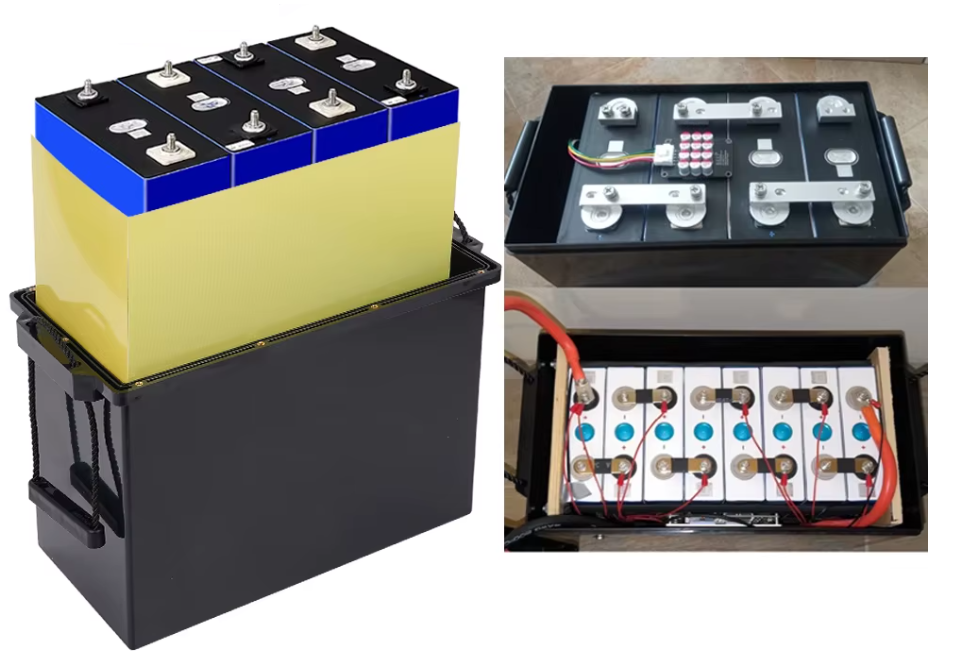
A 12.8 V lithium iron phosphate battery built from four 314 Ah cells in series, for roughly 4 kWh. Hand-assembled, compressed, balanced and tested before it ships.
What sets it apart isn't the chemistry, which everyone uses — it's what you can see of it. Its BMS talks over Bluetooth and RS485: Home Assistant reads each cell's voltage, the spread between them, the temperatures and the cycle count. You're not watching a four-bar gauge, you're seeing the real state of your battery.
How many days of autonomy
- 5 days with no recharging at all — and that isn't a calculation, it's a reading taken in a van
- The conditions: compressor fridge, four LED lights for three hours, roof fan for four hours, one hour of television, two phones charged, plus standby draw. About 640 Wh per day
- Autonomy is worked out on 80% of capacity, never 100%: claiming more would be selling you paper
- Run the numbers for YOUR equipment: the autonomy calculator is at heliolocal.fr/autonomie.php — fridge, lighting, fan, television, and it tells you the capacity you need
Depending on the capacity
- 105 Ah — about 1.3 kWh — nearly 2 days
- 150 Ah — about 1.9 kWh — nearly 2.5 days
- 200 Ah — about 2.6 kWh — about 3 days
- 280 Ah — about 3.6 kWh — about 4.5 days
- 314 Ah — about 4.0 kWh — 5 days (the model offered here)
⚠️ Watch the type of fridge, it decides everything. An absorption fridge running on 12 V draws around a hundred watts continuously: on its own it empties a 314 Ah in a single day. Those fridges are meant to run on gas when off-grid, and on 12 V only while the engine is running. Many vans end up with a flat battery believing the battery is at fault.
What you see in Home Assistant
- The voltage of each of the four cells, and the spread between highest and lowest
- State of charge, current in both directions, temperatures
- Accumulated cycle count — the only real measure of a battery's wear
- All of it locally, over Bluetooth or RS485. No account, no server, nothing leaving the vehicle
What's inside — and why we tell you
- 314 Ah LiFePO4 cells from a recognised maker, EVE or CATL depending on supply, new and top grade. The exact brand and batch numbers appear on your invoice
- A JiKong BMS, better known as JK — a proven reference, with active balancing between cells
- A battery comes down to two parts: the cells and the BMS. The rest is a box
- Many keenly-priced batteries name neither. When a seller doesn't say what went inside, the question is worth asking
Build
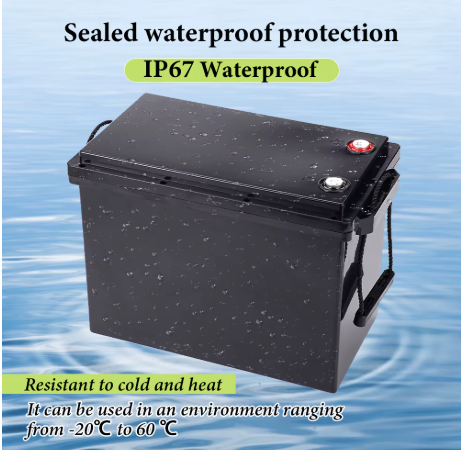
- IP67 case, stated range -20 to +60 °C, built-in handles and protected terminals
- Cells held under compression, as prismatic cells require
- Full balancing plus a charge and discharge test before dispatch
How long it lasts
- The cell manufacturer states over 8,000 charge and discharge cycles, with 70% of capacity still available at that point
- To picture what that means: even fully emptying and refilling it every single day, that is over twenty years. In a van used a few weeks a year, it will outlast the conversion around it
- And that is exactly why we name the cells. Eight thousand cycles is the specification of new, top-grade cells. Downgraded cells will never reach it — and nobody could tell you, since nobody told you what was inside
- The figure and the name go together. Either one alone is worthless
Options and other capacities
- Remote BMS display, to check the state without a phone: 39 €
- Other capacities (105, 150, 200, 280 Ah) and a 24 V version: on request
- Pricing tracks the cell market, which moves several times a year. A quotation is valid for 30 days
Delivery
- Collection possible at Hirson (02), France
- Shipping: a 25 kg lithium battery falls under regulated transport and is quoted per address. That is why it isn't sold in one click — ask for the quote, the answer comes quickly
⚠️ High-current DC wiring: a properly rated isolator, protection and cable cross-section are essential, and the battery must be secured in the vehicle.
Before choosing a capacity: tell us what you run and how many days you want to last. Sometimes the right answer is a smaller battery and one more solar panel — we say so when that's the case.
Compared to alternatives
| heliolocal | Budget battery | Lead-acid AGM | |
|---|---|---|---|
| Cell brand disclosed | ✓ | ✗ | ~ |
| BMS model disclosed | ✓ | ✗ | ✗ |
| Every cell readable locally | ✓ | ✗ | ✗ |
| No account, no proprietary app | ✓ | ✗ | ✓ |
| Fits into Home Assistant without a gateway | ✓ | ✗ | ✗ |
| Usable almost in full | ✓ | ✓ | ✗ |
| Sealed case, protected terminals | ✓ | ✓ | ~ |
| Assembled and tested in France | ✓ | ✗ | ✗ |
| Autonomy measured, not calculated | ✓ | ✗ | ✗ |
Price : from 699 € — custom integration: on quote